Reverso Tribute
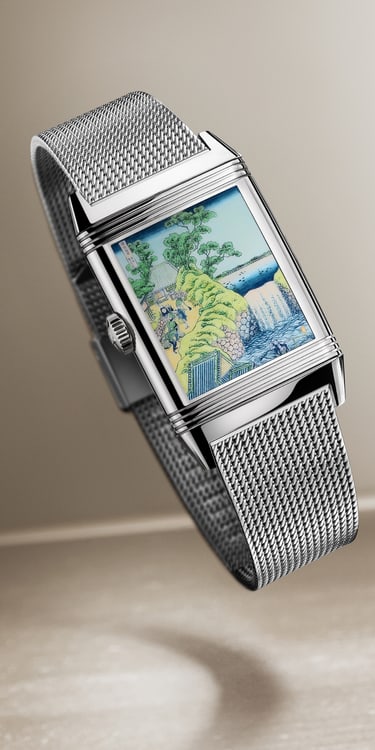
Enamel Hokusai Kiyotaki Kannon Waterfall
-

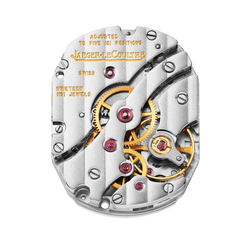
Jaeger-LeCoultre Calibre 822
Functions
Hour - MinuteMOVEMENT TYPE
Manual windingThickness
2.94mmVibrations per hour
The balance makes a to-and-fro movement at a given frequency (two vibrations). It is measured either in Vibration per Hour (VPH) or Hertz (Hz).21600Frequency (HZ)
The balance makes a to-and-fro movement at a given frequency (two vibrations). It is measured either in Vibration per Hour (VPH) or Hertz (Hz).3Power reserve
The time the watch will continue to function before rewinding is necessary.42 hoursComponents
108Jewels
Jewels are used as bearings for pivots to reduce friction in a watch movement.19Barrel
1
Color and material variants
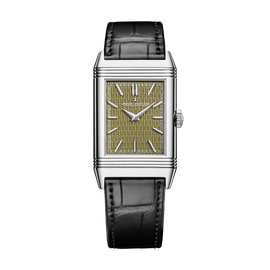
Personalise your watch
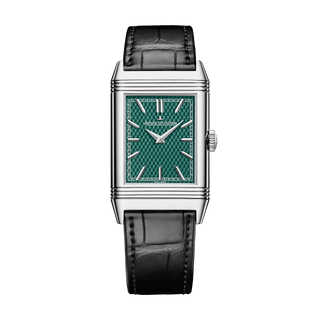
OVERVIEW
REVERSO TRIBUTE ENAMEL HOKUSAI
CRAFTSMANSHIP
80 HOURS OF MINIATURE PAINTING
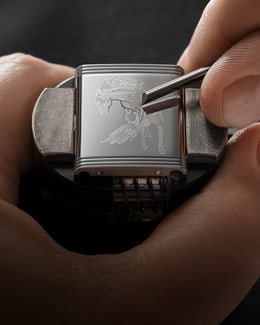
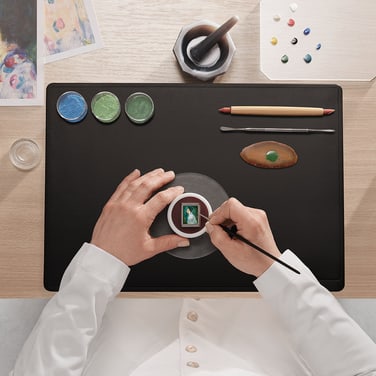
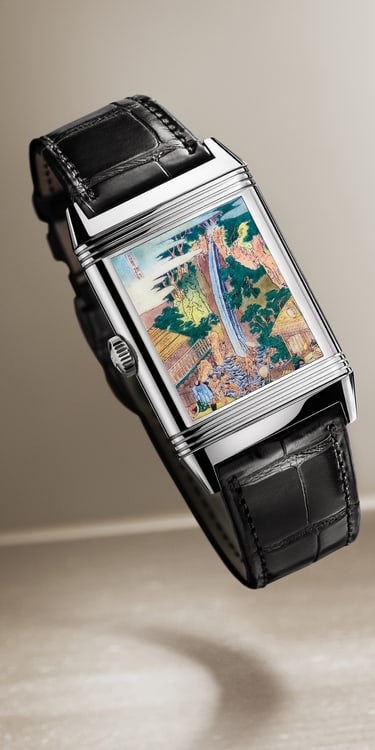
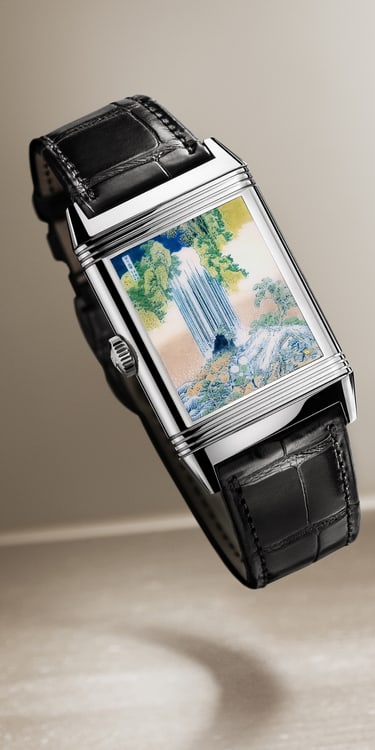
The miniature-enamel paintings were executed using the Geneva technique, involving at least 14 layers of enamel, each fired at 800°C, and requiring a total of 80 hours of meticulous work. The enameller faced the challenge of precisely reproducing every detail on a scale of 2 cm2.
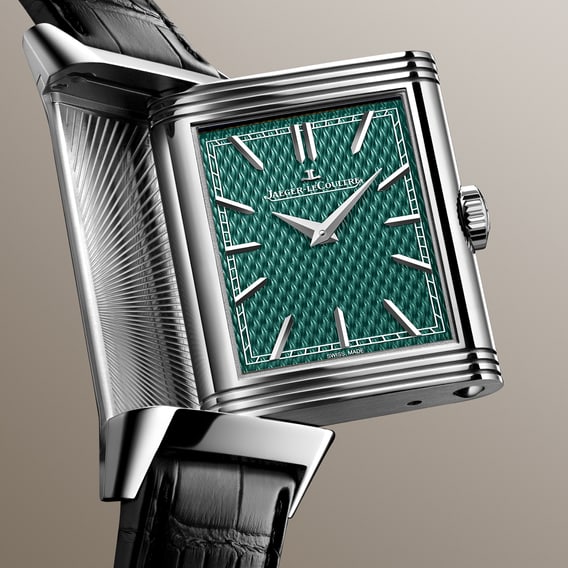
GUILLOCHÉ ENAMELLED DIAL
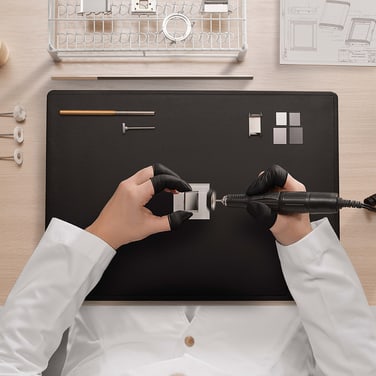
To complement the painting on the reverse side of the watch, the dial is hand-guilloché with a wavy pattern, consisting of 66 lines, each of which required three passages of the rose engine lathe (198 passages in total). This design lies beneath a layer of translucent grand feu enamel in an emerald green hue.
ART STORY
HOKUSAI, BRIDGING EAST AND WEST
Hokusai (c.1760–1849) was a pivotal innovator who bridged Eastern and Western art. He profoundly influenced Japanese art by transforming 19th-century ukiyo-e, broadening its subject matter to include landscapes, plants, and animals. His work, particularly through woodblock prints, shaped the West's perception of Japanese art and significantly influenced Impressionism and later art movements.
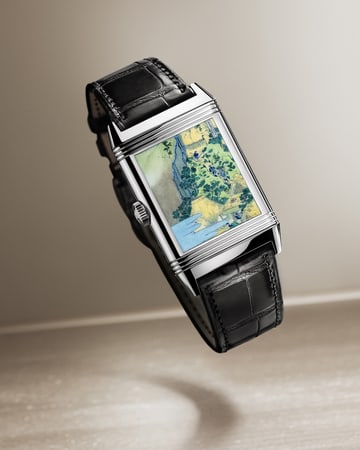
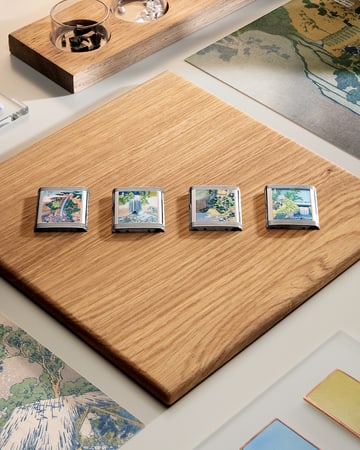
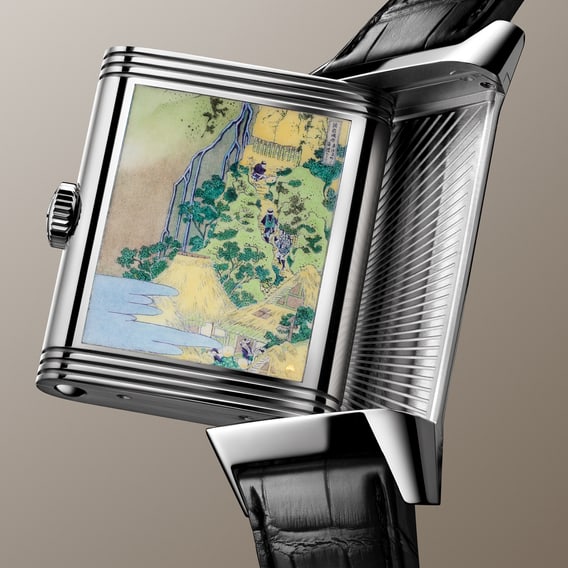
KIYOTAKI KANNON WATERFALL AT SAKANOSHITA ON THE TŌKAIDŌ
The miniaturised scene of the falling water is depicted as less powerful and more delicate than in other prints, almost like gentle silken strands. The waterfall shares its scene with the Kannon temple and pilgrims climbing steps, not only to admire the waterfall, but also to seek spiritual renewal.
CALIBRE
A RECTANGULAR HEART
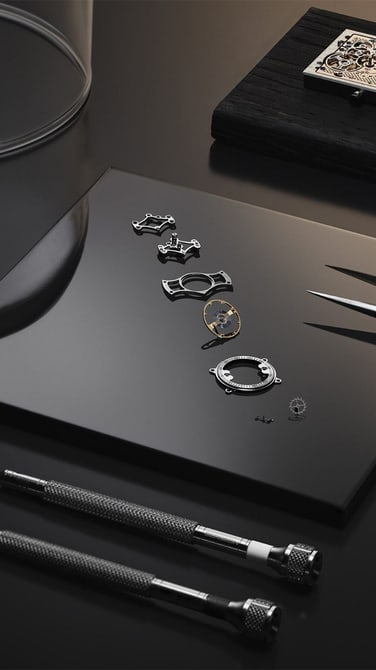
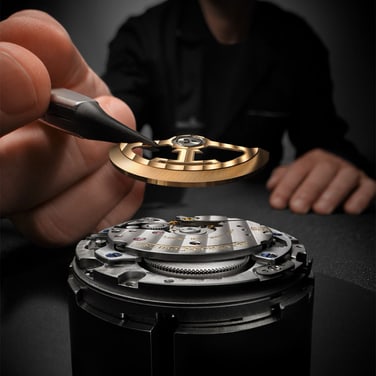
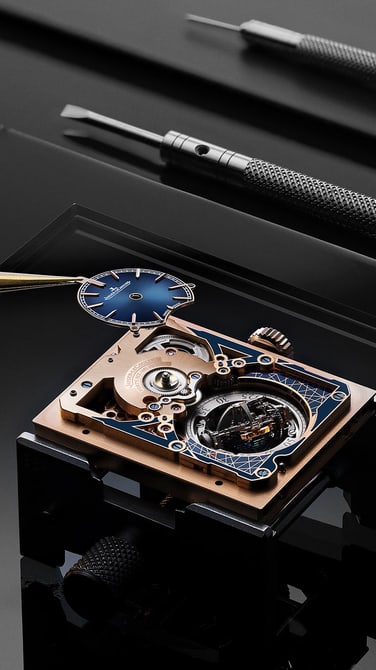
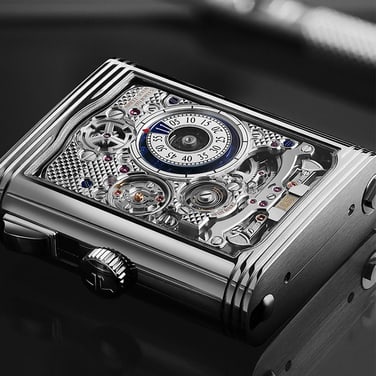
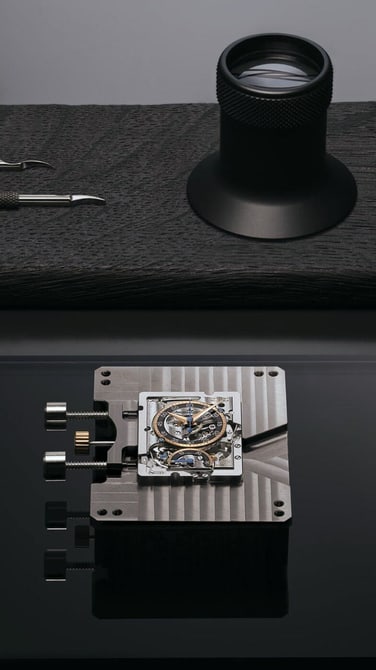
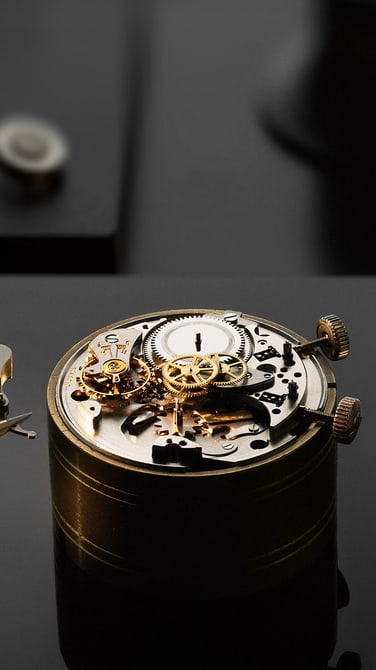
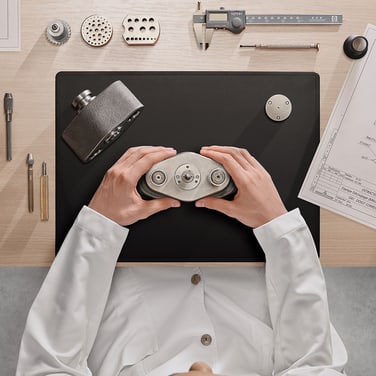
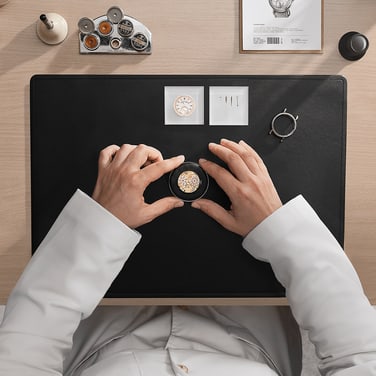
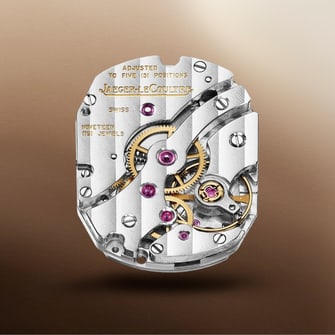
The manually wound calibre 822 that drives the Reverso Tribute Enamel Hokusai watch is the epitome of Jaeger-LeCoultre’s philosophy. Entirely designed, produced and assembled in-house, calibre 822 is an uncommon rectangular movement allowing it to fit in the Reverso watch case.
Calibre
HERITAGE
THE BIRTH OF AN ICON
In 1931, Jaeger-LeCoultre launched a watch that was destined to become a classic of 20th-century design: the Reverso. As an object that so deftly synthesised form and function, it has become one of the most recognisable watches of all time, looking as fresh and modern today as when it first appeared.
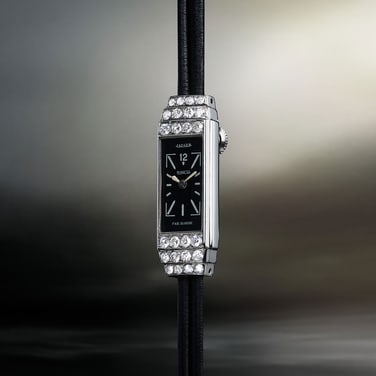
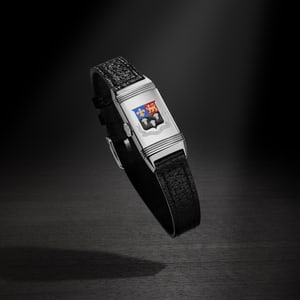
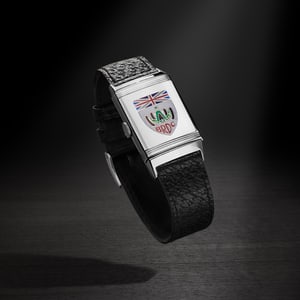
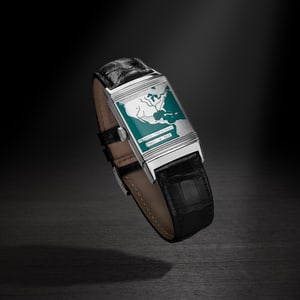
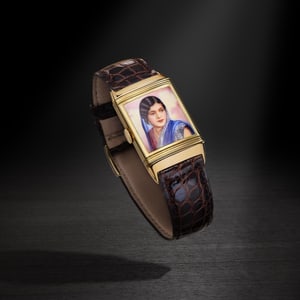
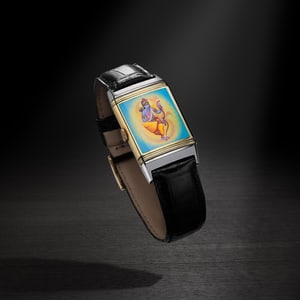
While its blank metal flip side had begun as a purely functional solution to avoid damage to the dial, it was an ideal surface for personalisation with monograms, emblems or personal messages using lacquer, engraving, enamel or gemstones. The Jaeger-LeCoultre museum showcases exceptional examples of this craftsmanship, including the 1936 Reverso ‘Indian Beauty’.
COLLECTION
Being the perfect canvas for artistic expression, personalisation has been at the core of Reverso watch since its creation. With 180 skills under one roof, the Atelier des Métiers Rares™ of Jaeger-LeCoultre is the perfect place to bring personalisation to life.
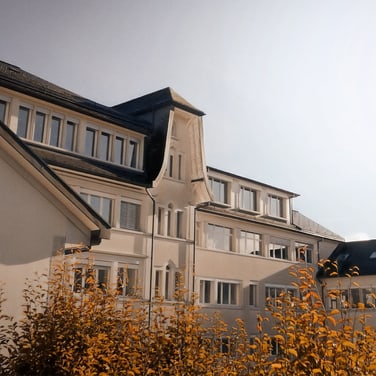
LA GRANDE MAISON
THE WATCHMAKER OF WATCHMAKERS™
190+ YEARS
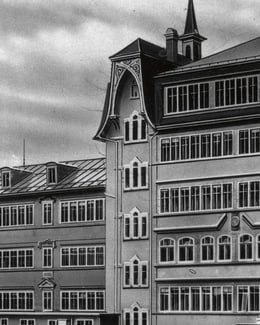
Since 1833, Jaeger-LeCoultre’s quest for excellence combines creativity and technical mastery.
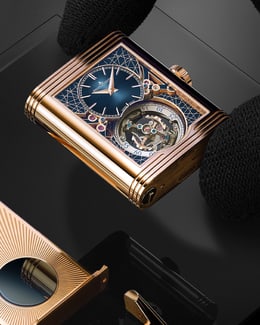
430+ PATENTS
The Manufacture’s engineers and designers unite their passion and expertise to develop cutting-edge complications.
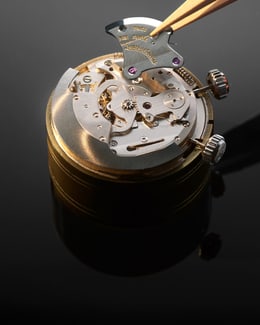
1400+ CALIBRES
Over the years, Jaeger-LeCoultre has never ceased to innovate, creating unique and original calibres of great complexity.