OVERVIEW
UNIQUENESS: A GEOMETRIC VISION OF THE PERPETUAL CLOCK
DESIGN
A DESIGN OF DEPTH AND HARMONY
The Atmos Régulateur Wood Marqueterie combines geometric pattern with 6 different finishes, creating a composition where depth, materials and mechanism interact in a consistent design.
A PLAY OF GEOMETRIC ILLUSION
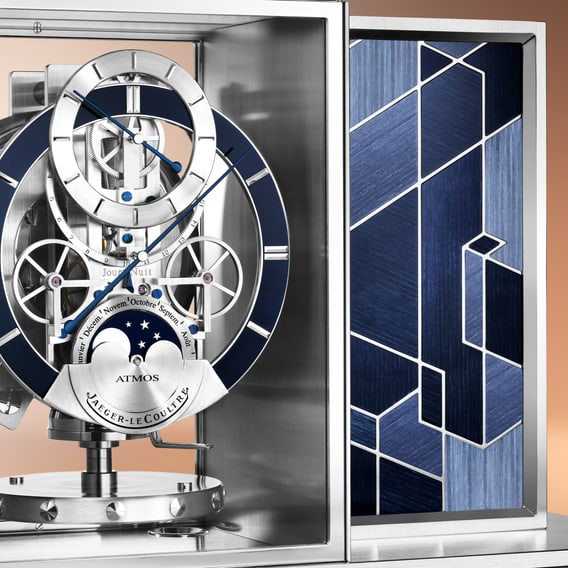
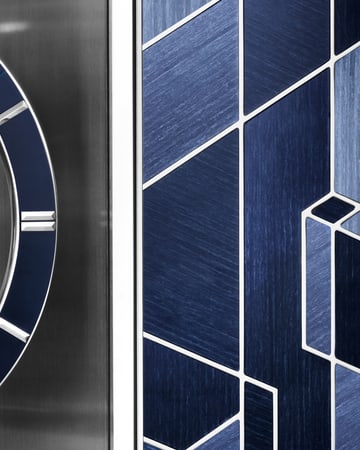
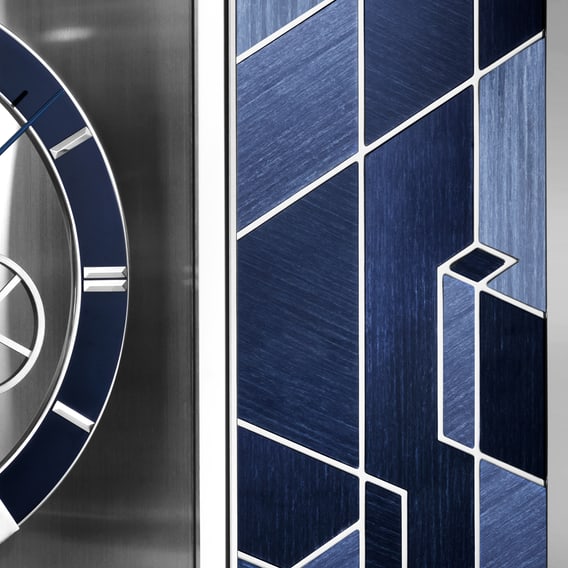
The marquetry panels create a striking illusion of depth through a geometric composition built from precisely assembled walnut veneer leaves. Tinted in a camaieu of blue tones, the pattern combines shifting orientations of the wood grain with intersecting lines that suggest architectural volumes and receding planes. Although the surface is entirely flat, the composition transforms the two-dimensional marquetry into a graphic structure that appears almost three-dimensional.
A DIALOGUE OF TEXTURES
At the centre of the composition, the glass cabinet reveals the suspended Atmos mechanism, allowing the movement to appear almost weightless. Around it, carefully balanced finishes structure the design: brushed surfaces subtly echo the grain of the wood marquetry, while blue lacquered elements and matching indexes on the dial displays reinforce the chromatic harmony of the composition. Azuré finishes on hours dial add further texture, creating a consistent dialogue between material, colour and mechanism.

CRAFTSMANSHIP
A CENTURIES-OLD CRAFT
The decorative panels of the Atmos Régulateur Wood Marqueterie draw on a centuries-old craft where patience, material and precision come together. From the historical tradition of wood marquetry to the careful selection and shaping of each veneer leaf, the composition reflects a discipline shaped by time as much as by skill.
AN ANCIENT DISCIPLINE OF PATIENCE
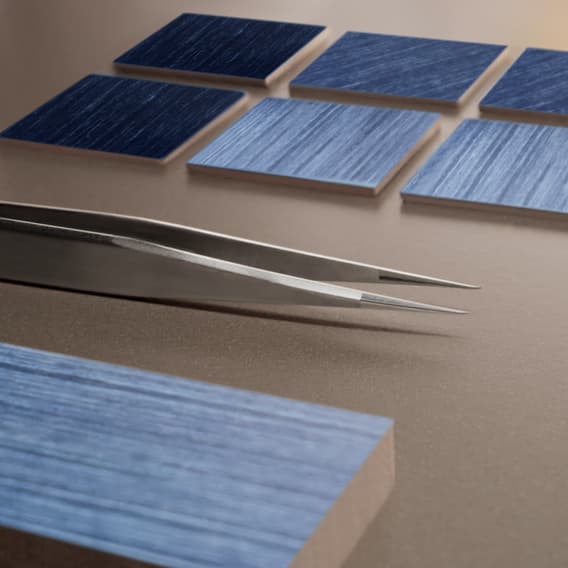
Marquetry is a decorative craft that flourished in Europe during the 17th century, when master cabinet makers elevated it to a refined art of assembling intricate wood compositions. This demanding discipline requires years, often decades, to master. Each design is created from extremely thin wood veneers that are cut, tinted and assembled with meticulous precision.
A LEGACY OF MARQUETRY
Wood marquetry has been part of the Atmos story since the early years of the clock. As early as the 1930s, Jaeger-LeCoultre created Atmos cabinets decorated with refined wood, reflecting the decorative arts of the period. Crafted from carefully selected veneers, each composition required precise cutting, assembly and finishing. These early pieces illustrate how the Atmos quickly became not only a technical achievement, but also a canvas for artistic craftsmanship.
A WOOD SHAPED BY TIME
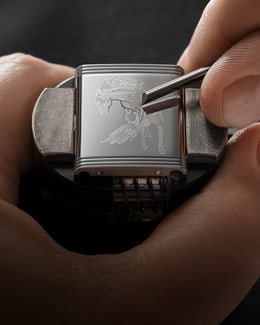
Wood marquetry demands exceptional precision and patience, especially at the scale required for the Atmos Régulateur Wood Marqueterie. Composed of 52 walnut veneer leaves, each only 0.6 mm thin, the design is built through meticulous cutting, tinting, engraving and assembly, requiring 80 hours of work. Selecting the wood itself is equally demanding: the tree must be sufficiently mature to reveal the rich grain patterns needed for the composition. In this way, the centuries-long growth of the wood echoes the enduring nature of the Atmos, a clock conceived to measure time on an equally long horizon.
CALIBRE
THE CLOCK LIVING ON AIR
The Atmos mechanism is powered by tiny variations in ambient temperature, using no winding and no external energy source. A hermetically sealed gas capsule expands and contracts, transmitting this motion to wind the mainspring with extreme efficiency. A change of just 1°C can provide about 48 hours of running time. Its consumption is so low that 60 million Atmos clocks would use the same energy as a single 15-watt light bulb.
PERPETUAL REGULATOR MOVEMENT CALIBRE 582
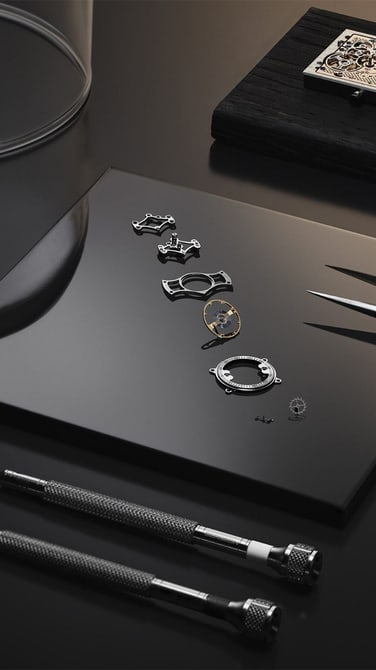
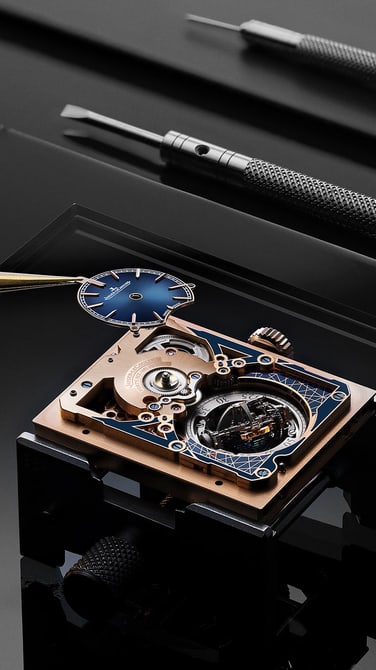
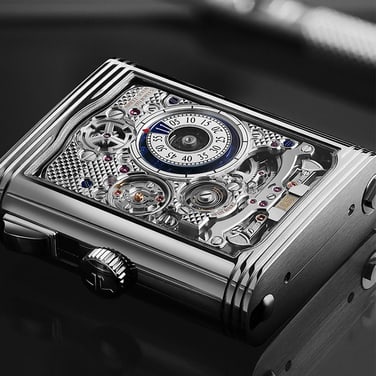
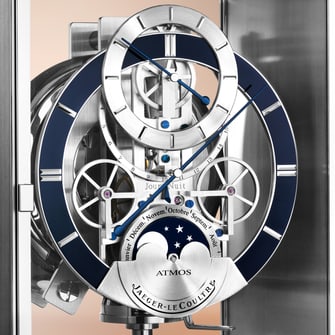
The Jaeger-LeCoultre Calibre 582 is entirely conceived and produced in the Atmos atelier. Its regulator display separates hours and minutes for exceptional legibility, a layout historically used in precision reference clocks. The architecture is organised in concentric rings, with a suspended 24-hour disc stabilised by three open-worked guide rollers in a pyramid layout. The moon phase indication completes the display and remains accurate to one day in 3,821 years.
MOVEMENT
LA GRANDE MAISON
THE WATCHMAKER OF WATCHMAKERS™
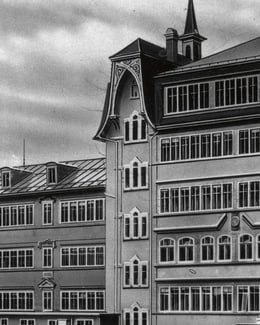
190+ YEARS
Since 1833, Jaeger-LeCoultre’s quest for excellence combines creativity and technical mastery.

430+ PATENTS
The Manufacture’s engineers and designers unite their passion and expertise to develop cutting-edge complications.
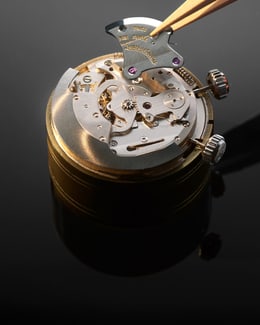
1400+ CALIBRES
Over the years, Jaeger-LeCoultre has never ceased to innovate, creating unique and original calibres of great complexity.